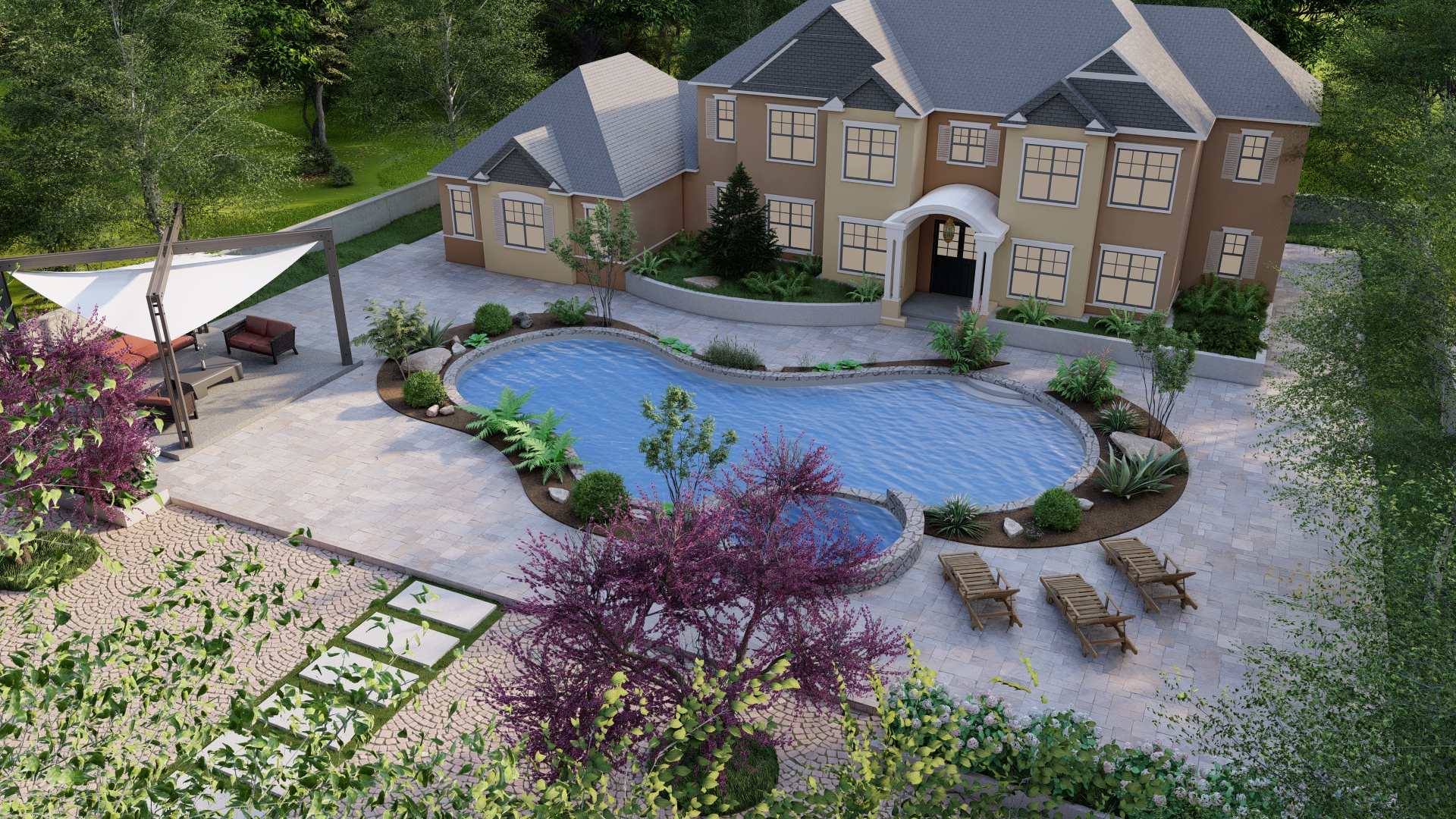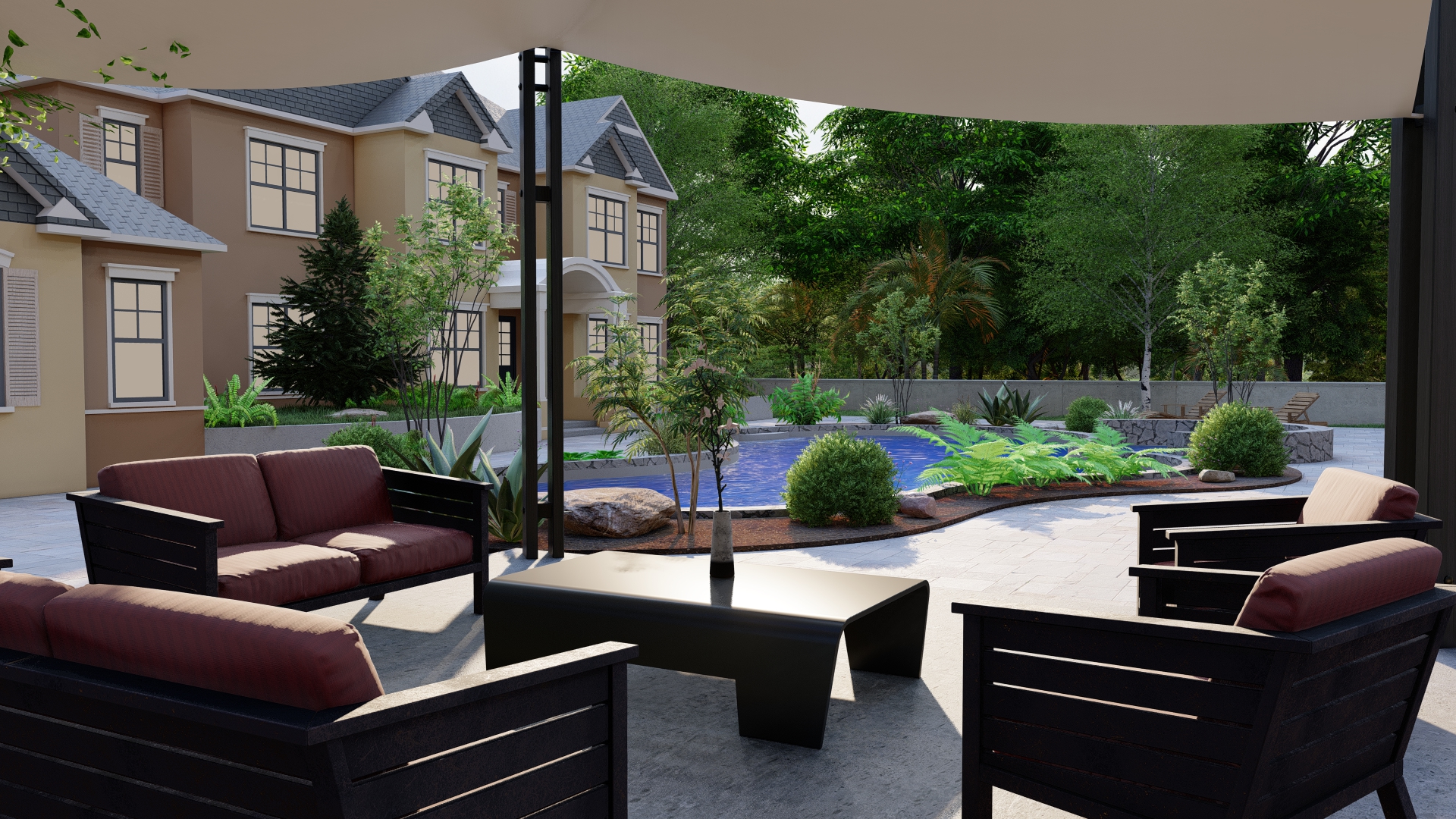

Hardscaping is the non-living part of a landscape: patios, walkways, retaining walls, steps, fire pits, driveways and other built features. Softscape is everything that grows. Good landscapes balance the two. Hardscape gives the yard structure and usable space, and plants soften it and tie it to the setting.
Common Hardscape Features
- Patios: the outdoor room most yards are built around. See patio design.
- Walkways and steps: connecting the drive, doors and garden. See walkways.
- Retaining walls: holding back slopes and creating level terraces. See retaining walls.
- Fire pits and outdoor kitchens: features that extend the season. See fire pits and outdoor kitchens.
- Decks: raised outdoor living space, usually in wood or composite. See custom decks.
- Driveways and slabs: poured or stamped concrete. See concrete.
Materials Used in Hardscaping
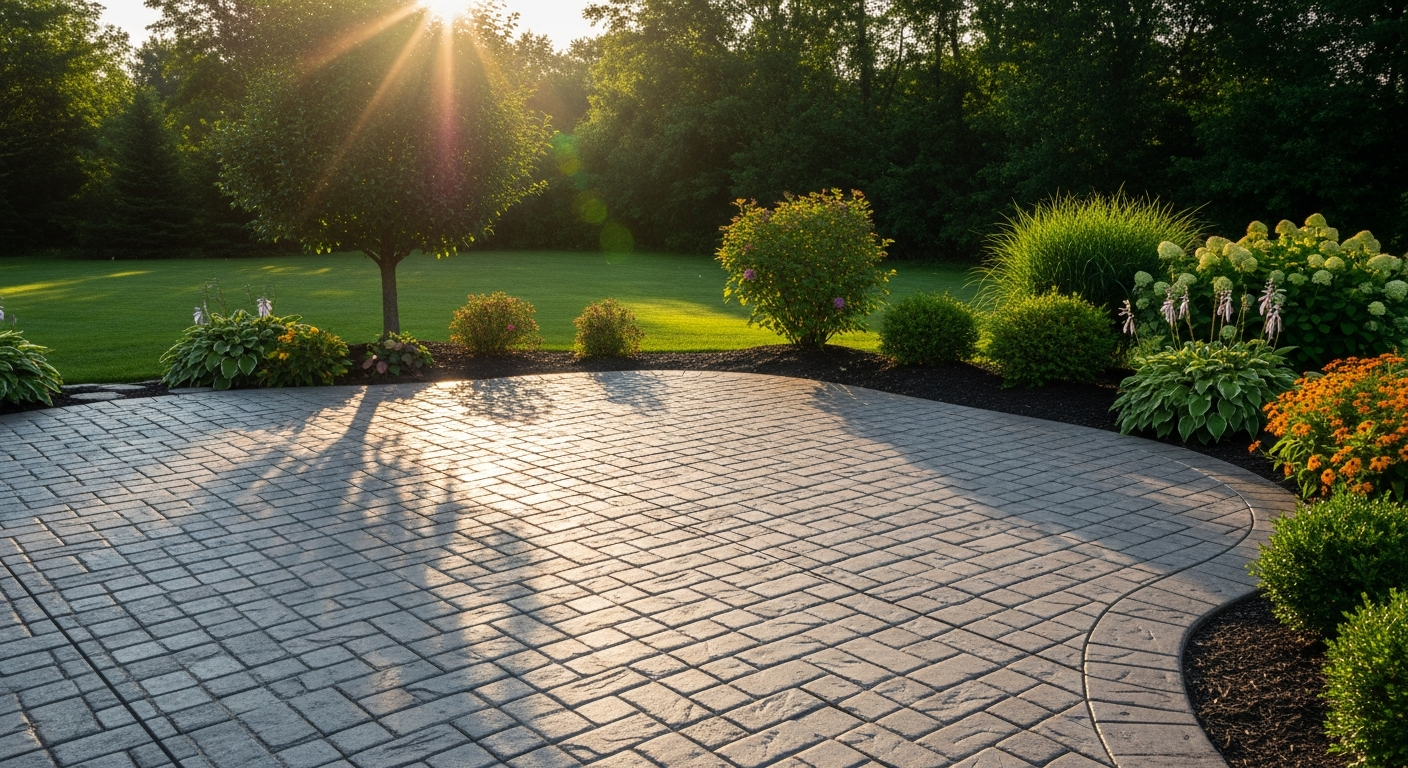
- Concrete pavers: individual units in many shapes and colors, laid over a compacted base. Easy to repair section by section.
- Poured and stamped concrete: a continuous slab that can be colored and textured. See our comparison of pavers vs stamped concrete.
- Natural stone: flagstone, limestone and fieldstone for a natural look on walks, walls and steps.
- Brick: a classic look that suits traditional homes.
- Wood and composite: mostly decks, pergolas and fencing.
- Metal: steel edging, railings and pergolas for a cleaner, modern look.
What Makes Hardscape Last in Michigan
Hardscape here has to survive freeze-thaw cycles, road salt and, across much of Oakland County, heavy clay soil that holds water and moves. What lasts:
- A proper base: excavated to the right depth and compacted in layers, with more base under anything that carries vehicles.
- Drainage: surfaces pitched away from the house, and drainage stone behind retaining walls so water does not build up pressure.
- Edge restraint: paver edges held firmly so the field cannot creep apart.
- Footings below the frost line for structures such as pergolas and decks.
- Materials suited to freeze-thaw and salt.
Benefits of Hardscaping
- More usable space: a patio or terrace turns lawn you only walk past into somewhere you spend time.
- Less maintenance where grass struggles: steep slopes, deep shade and high traffic paths are easier to keep as hardscape than as lawn.
- Better access: wide, level walks and well built steps make the yard easier and safer to use for everyone.
- Erosion and water control: walls and grading hold soil in place and move water where you want it.
- Curb appeal and value: well built hardscape is one of the most visible improvements you can make to a property.
DIY or Professional?
A small garden path is a reasonable DIY project. Patios, walls over a couple of feet, steps and anything next to the house involve excavation, heavy compaction equipment and drainage decisions that are expensive to redo. A professional also handles MISS DIG notification, permits where needed and disposal of old material.
If you are planning hardscape in Farmington Hills or nearby, see our hardscaping services or request a quote.