
Landscaping a front yard feels like a big job because it is really several jobs: fixing what is wrong with the site, deciding how people move through it, and choosing plants and materials that last. Take them in order and it gets manageable. Here is the order we would follow on a front yard in southeast Michigan.
Step 1: Assess Your Space
Before you draw anything, spend some time looking at what you have:
- Sun: note which parts of the yard get full sun, part shade or full shade, and at what time of day. It decides every plant choice later.
- Soil and water: much of Oakland County is heavy clay. After a big rain, look for spots where water sits, and check that the ground slopes away from the foundation. If it does not, fix that first; see drainage.
- What stays: existing trees, shrubs worth keeping, the driveway and the front walk.
- Utilities and rules: gas, electric and water lines, plus any HOA or city restrictions. Before any digging, call MISS DIG 811, which Michigan law requires at least three business days ahead.
Step 2: Develop a Plan
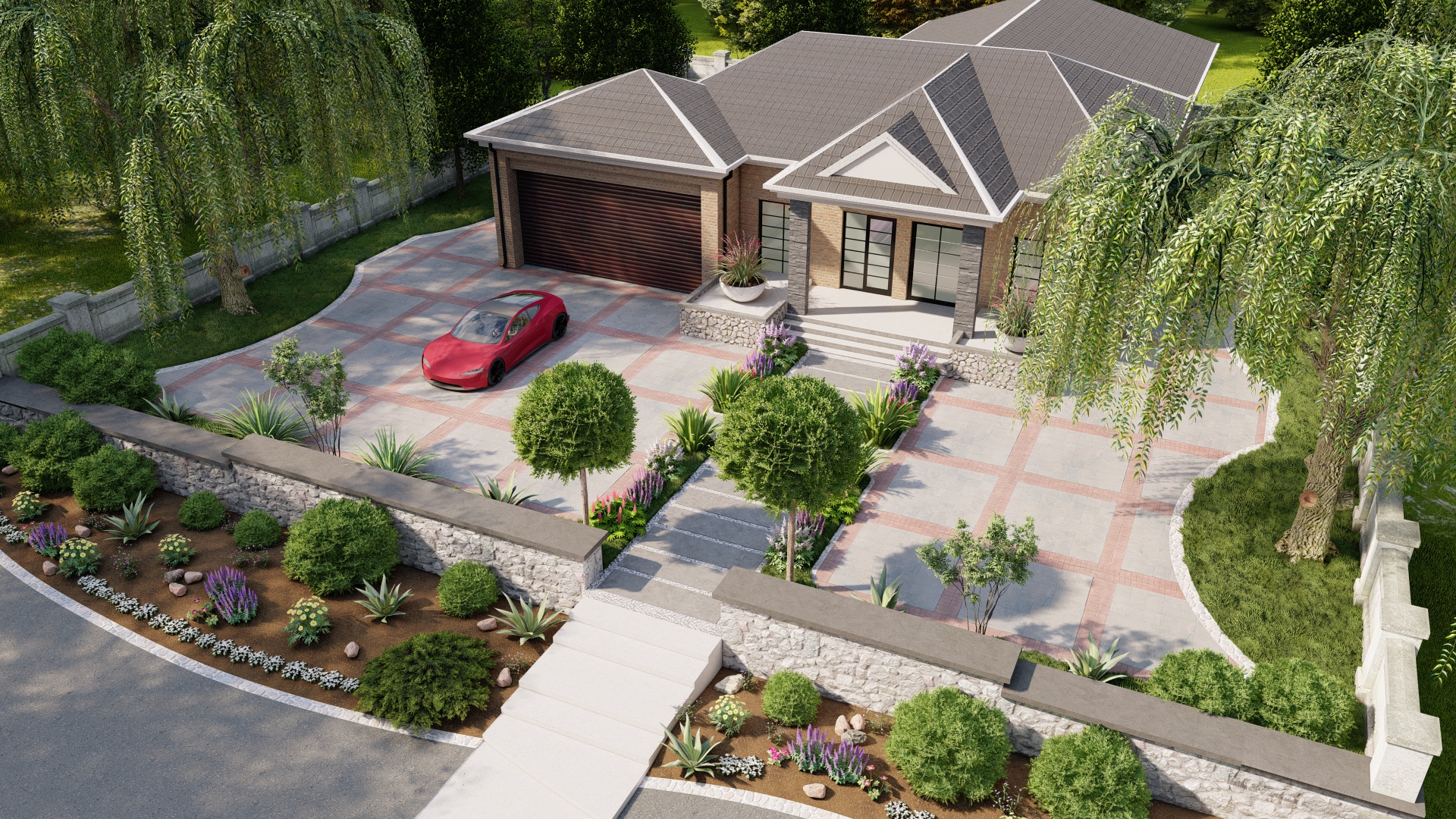
Sketch the yard roughly to scale on graph paper or over a printed aerial photo. Mark the house, the drive, the walk and anything that is staying. Then decide how people get from the drive to the door. A front walk wide enough for two people side by side feels welcoming; a narrow one feels like an afterthought.
Plan the beds next. Deeper beds along the foundation, a planting at the corner of the drive, and one focal point near the entry usually do more than scattering small beds across the lawn. If you want a small seating area in front, plan it now so the walk and beds work around it.
Step 3: Choose Your Plants
Choose plants rated for a zone 6 winter or colder that suit the light and soil you noted in step 1. Mix evergreens for winter structure, flowering shrubs and perennials for color, and one ornamental tree as a focal point. Our posts on making a front yard pop and ornamental trees for the front yard cover specific plants that do well here.
Step 4: Add Hardscaping Elements
Hardscape gives the yard its structure. The common front yard pieces are:
- A front walk in pavers, natural stone or concrete. See walkways.
- Low walls or raised beds where the yard slopes. See retaining walls.
- Path lights and uplighting for safety and curb appeal after dark. See outdoor lighting.
- A widened or resurfaced driveway apron, often the largest single surface in view from the street. See concrete.
In Michigan, the base under any walk or wall matters more than the surface on top. Freeze-thaw and clay soil will lift or sink anything built on a thin base.
Step 5: Build in the Right Order
Hardscape and grading go in first, because they involve heavy equipment that would crush new plants. Planting comes after. Spring and early fall are the best planting windows here; hardscape can go in any time the ground is not frozen. If you want everything done by early summer, start planning over the winter.
Step 6: Maintain Your Landscape
Water new plantings deeply through their first season, keep 2 to 3 inches of mulch on the beds, and cut back and clean up in spring and fall. If you would rather not do it yourself, see seasonal maintenance and fall and spring cleanup.
If you want help with the design, the build or both, see landscape design or request a quote.