
If you live in Farmington Hills, you know how fall goes. The maples turn first, the lawn disappears under them for a couple of weeks, and just when the yard looks clear again the oaks start dropping. A fall cleanup that ignores that sequence either goes in too early and misses half the leaves, or goes in too late and finds the first layer already matted into the turf.
This guide covers when leaves actually come down here, why most properties need two passes, when leaving leaves is fine and when it is not, and how to fit aeration and overseeding around it all. If you would rather hand the whole thing off, our fall and spring cleanup service is built around the same timing.
When the Leaves Come Down in Farmington Hills
Leaf drop is driven by shorter days and cooler nights, so the exact week shifts a little every year with the weather. The order barely changes, though, and the order is what matters when you plan a cleanup.
- Maples and ash: in most years the bulk of these come down from mid to late October. A single mature sugar maple can bury a lawn in a week or two.
- Oaks: oaks turn late and drop late, often well into November. Pin oaks and young oaks can hold dry brown leaves all winter and let them go a few at a time until spring.
- Other late holders: Callery (Bradford) pears and beeches also hang on late, so a yard with these trees is not finished when the maples are.
The gap between the maple drop and the oak drop is the whole reason fall cleanup timing is tricky. A yard with only maples can often be wrapped up by early November. A yard under mature oaks is not done until the oaks are.
Why One Fall Cleanup Is Usually Not Enough
The usual plan is to wait until every leaf is down and do one big cleanup. On a lot with mixed trees, that means the maple leaves sit on the lawn for three or four weeks while you wait for the oaks. In a wet Michigan fall they flatten, block light and start to mat. Cool season grass is still growing in October and needs that light to store energy for the winter.
A two-pass cleanup splits the job along the natural leaf drop:
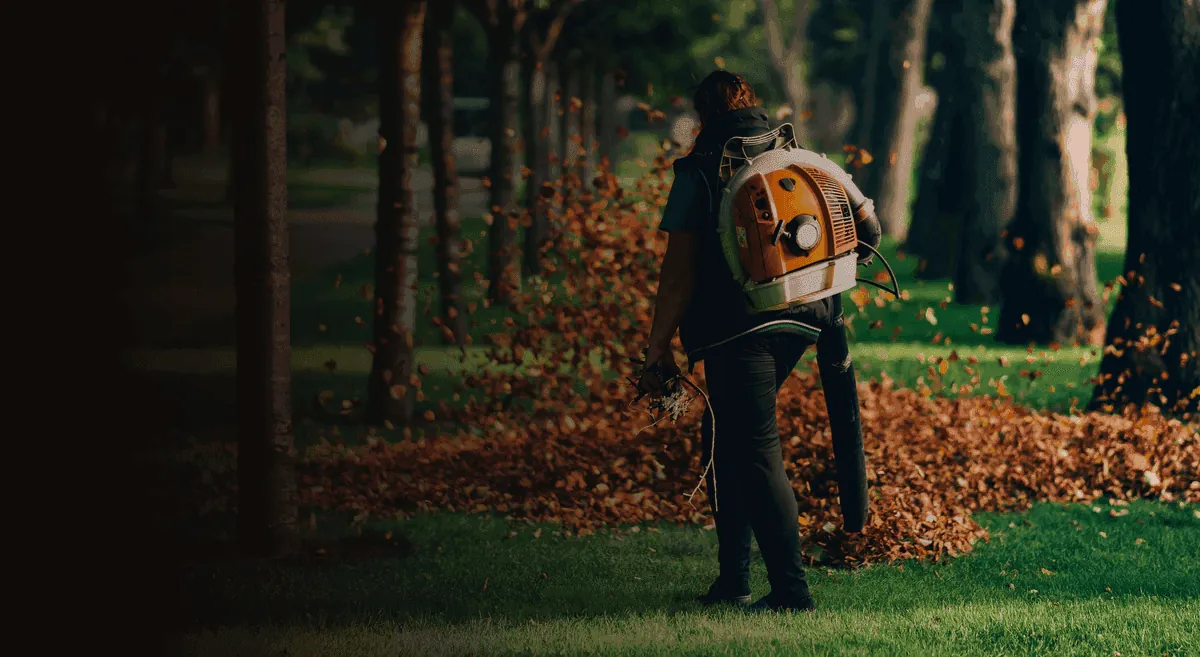
- First pass, once most of the maples and ash are down (usually mid to late October): clear the lawn and beds, cut back perennials that are finished, and pull out anything collecting against the house.
- Second pass, after the oaks finish and before the ground freezes hard: take up the late leaves, check gutters and downspout outlets, and leave the lawn clean going under the snow.
The second pass also catches everything that blew in from the neighbors after the first one. On wooded lots that can be a lot of leaves.
What Happens If You Leave the Leaves on the Lawn
A thick layer of whole leaves left on turf over winter sets up snow mold. Gray and pink snow mold are common in Michigan lawns. They show up in spring as matted, straw colored patches, usually where snow and leaves sat longest. Many lawns recover with a light raking and time, but bad patches may need reseeding, which costs you part of the spring.
Matted leaves also hold moisture against the base of shrubs and foundation plantings, give voles cover under the snow, and slow down spring green-up. One winter of that is not a disaster. Year after year, it thins a lawn.
When Leaving Leaves Is Fine
Leaving leaves is not always wrong. A light layer of shredded leaves is very different from a mat of whole ones.
- Mulched into the lawn: if you can still see grass after a pass with a mulching mower, shredding the leaves in place is fine and returns organic matter to the soil. Michigan State University Extension has long recommended mulching light leaf cover rather than raking it.
- In planting beds: shredded leaves in perennial and shrub beds work as a winter mulch and give overwintering insects somewhere to shelter. Keep them pulled back a few inches from stems and away from the foundation.
- In natural areas: wooded edges and back corners that are not lawn can keep their leaves.
What does not work is whole leaves several inches deep on turf, or wet leaves piled against the house, a fence or the base of a young tree.
Aeration and Overseeding Timing
Fall is the best time of year to work on a cool season lawn in southeast Michigan. The Kentucky bluegrass, perennial ryegrass and fescue lawns common around Farmington Hills put down roots while the soil is still warm and the air is cooling off.
- Core aeration: early fall, while the grass is actively growing, is the best window. The heavy clay found across much of Oakland County compacts easily and benefits most. Aerate before the leaves bury the lawn, or between the two cleanup passes, never on frozen ground.
- Overseeding: seed needs warm soil to germinate, so the best window is late August to mid September. Seed that goes down later in September can still take, but it has less time to establish before winter. By October you are usually better off waiting.
- Dormant seeding: if you miss the window, seed can go down in late fall once the soil is too cold for it to sprout. It sits over winter and germinates in spring. It works best on bare or thin patches prepared ahead of time.
- Leaves and new seedlings do not mix: a layer of leaves over newly germinated grass smothers it fast. If you overseed, keep leaves off those areas even if the rest of the yard waits for the first cleanup pass.
So the order in a year when the lawn needs work is: aerate and seed as early in fall as you can, keep the seedlings clear of leaves through October, then clean up properly after the oaks.
Other Fall Jobs to Fit Around the Cleanup
- Sprinkler blowout: irrigation lines have to be blown out before the first hard freeze, or water left in the pipes and heads can crack them. Most homeowners book it for October. See irrigation services.
- Drainage: fall is when you find out where water sits. Leaves clog downspout extensions, catch basins and drain inlets. If the same spot floods every fall, look at yard drainage before the ground freezes.
- Trees: most pruning is better done in late winter, but dead, broken or hanging limbs should come down before snow and ice load them. Anything large is a job for a tree removal crew, not a ladder.
- Mowing: keep mowing as long as the grass keeps growing. Going into winter at a normal height, not overly long, reduces matting and snow mold.
- Driveway edges: stake the edges of drives and walks before the ground freezes so plows and shovels do not tear up the turf. See snow removal.
Municipal Leaf Pickup in Farmington Hills
Michigan keeps yard waste out of landfills, so leaves cannot go in your regular trash cart. In Farmington Hills, as in most Oakland County communities, leaves are collected as yard waste, usually in paper yard waste bags or a marked container, on a seasonal schedule. The bag rules and the final collection week are set by the city and its hauler and can change from year to year, so check the City of Farmington Hills website or your hauler's notice before you start bagging.
Do not rake leaves into the street. They wash into storm drains and catch basins, and many cities prohibit it. If you hire a cleanup, ask whether the leaves are hauled away or left at the curb, because that decides how much bagging you are left with and whether you are working to the city's pickup schedule.
A Simple Fall Timeline
- Late August to mid September: aerate, overseed thin areas and fertilize the lawn.
- Late September to early October: keep mowing, keep new seedlings clear, and clean the gutters once the first leaves drop.
- Mid to late October: first cleanup pass once the maples and ash are mostly down. Sprinkler blowout.
- Early to mid November: second cleanup pass after the oaks, before the ground freezes. Stake driveway edges.
- Late November onward: dormant seeding if you missed the September window.
The weather can move any of these by a week or two in either direction. The sequence holds.
Booking Fall Cleanup and Leaf Removal
Fall cleanup calendars fill as soon as the leaves turn, because everyone looks at their yard on the same weekend. If you want both passes, book before the maples drop, and mention any oaks so the second visit is planned rather than squeezed in. You can request a quote or read what a visit covers on our fall and spring cleanup page. For care through the rest of the year, see seasonal maintenance.